
Madrid’s development into the thriving metropolis it is today can be attributed to a diverse group of influencers who left an indelible mark on the city. These individuals, spanning monarchs, architects, artists, writers, and modern planners, each played a role in shaping Madrid’s identity.
1. Philip II (1527-1598)
The decision by King Philip II to make Madrid the capital of Spain in 1561 was arguably the most significant turning point in the city’s history. His choice was motivated by Madrid’s central location, which made it an ideal seat of government. Under his reign, the city began to grow in importance, attracting the nobility and leading to the construction of key buildings like the Royal Palace.
Philip II’s decision laid the groundwork for Madrid’s transformation from a modest town into a political and cultural center. The establishment of the capital attracted a wave of architects, artists, and scholars, all of whom contributed to Madrid’s burgeoning cultural scene. Among Philip II’s contemporaries were architect Juan Bautista de Toledo, who began the construction of El Escorial, and Juan de Herrera, who completed it. These figures were instrumental in the development of the Herrera style, characterized by its austere and monumental design, which influenced many buildings in Madrid.
The Royal Palace and the construction of important civic structures set the stage for future urban development, ensuring Madrid’s central role in Spain’s history.
2. The Literary Giants of the Barrio de las Letras
Madrid’s Barrio de las Letras, or Literary Quarter, is named after the numerous writers who lived and worked there during Spain’s Golden Age. This neighborhood became the heart of Spain’s literary movement, with names such as Miguel de Cervantes, Lope de Vega, and Francisco de Quevedo residing within its bounds.
- Miguel de Cervantes (1547-1616), the author of Don Quixote, is arguably Spain’s most famous writer. His work not only laid the foundation for the modern novel but also provided a vivid depiction of the societal changes in Spain during the late Renaissance.
- Lope de Vega (1562-1635), known as the ‘Phoenix of Wits,’ was one of the most prolific playwrights in history, having penned over 1,500 plays. His work was instrumental in shaping Spanish theater, making the comedia a central genre.
- Francisco de Quevedo (1580-1645), a satirical writer and poet, is known for his sharp wit and critical perspective on Spanish society. His works often depicted the complexities of human nature, earning him a prominent place in Spanish literature.
These writers not only contributed to the global literary canon but also helped establish Madrid as a cultural and intellectual hub.
3. Juan Gómez de Mora (1586-1648)
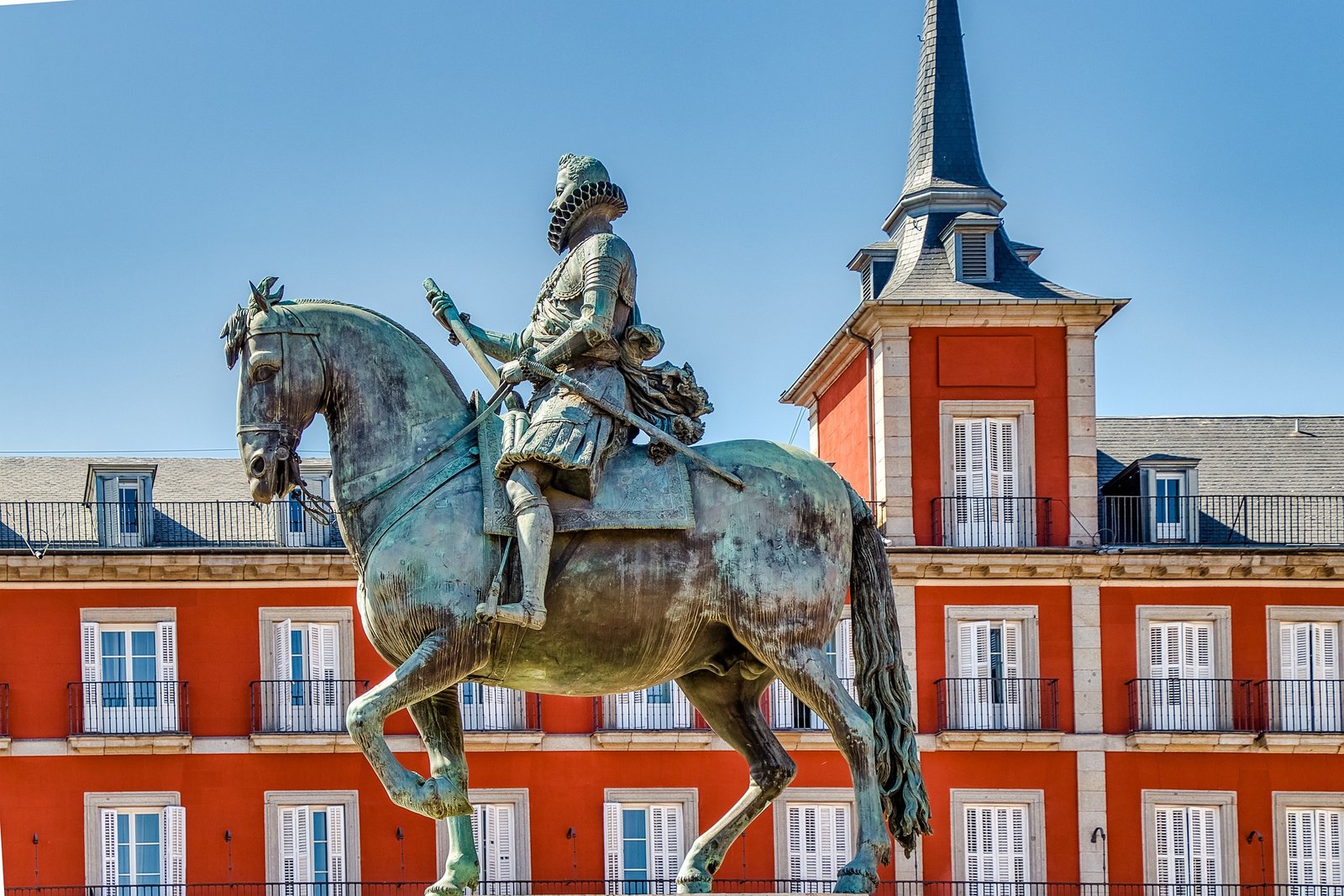
An influential architect during the Habsburg dynasty, Gómez de Mora was responsible for some of Madrid’s most iconic structures, including the Plaza Mayor and the Convent of La Encarnación. His designs helped shape the architectural character of the city, with a focus on grandeur and symmetry.
Gómez de Mora’s work in Madrid solidified the city’s identity as a Baroque capital. The Plaza Mayor, with its uniformity and balanced proportions, became the model for public squares across Spain and Latin America. The Convent of La Encarnación added to the religious and cultural landscape of Madrid, becoming a site of pilgrimage and artistic patronage.
His contemporaries, such as Francisco de Mora, who designed the Palacio de los Consejos, and Sebastian Herrera Barnuevo, who contributed to the Retiro Palace, played vital roles in the continued Baroque transformation of Madrid. Together, these architects fostered a cultural renaissance that is still evident in the city’s historical core.
4. Artistic Masters: Goya and Velázquez
Madrid’s artistic heritage is deeply connected to two of Spain’s most renowned painters, Diego Velázquez and Francisco de Goya, both of whom left an enduring legacy on the city.
- Diego Velázquez (1599-1660), court painter to King Philip IV, is best known for his masterpiece Las Meninas. His work is celebrated for its realistic depiction of royal life and its innovative use of perspective. Velázquez’s influence can be seen in the countless artists who followed him, making Madrid a focal point of Baroque art.
- Francisco de Goya (1746-1828), often considered the father of modern art, documented the tumultuous changes of his time through his paintings, etchings, and drawings. His work, such as The Third of May 1808 and the Black Paintings, reflects the socio-political upheavals of Spain and his own dark, introspective style. Goya’s influence on modern art is immeasurable, with his works housed prominently in Madrid’s Prado Museum.
These artists not only shaped the aesthetic sensibilities of their time but also established Madrid as a center for artistic innovation.
5. Charles III (1716-1788)
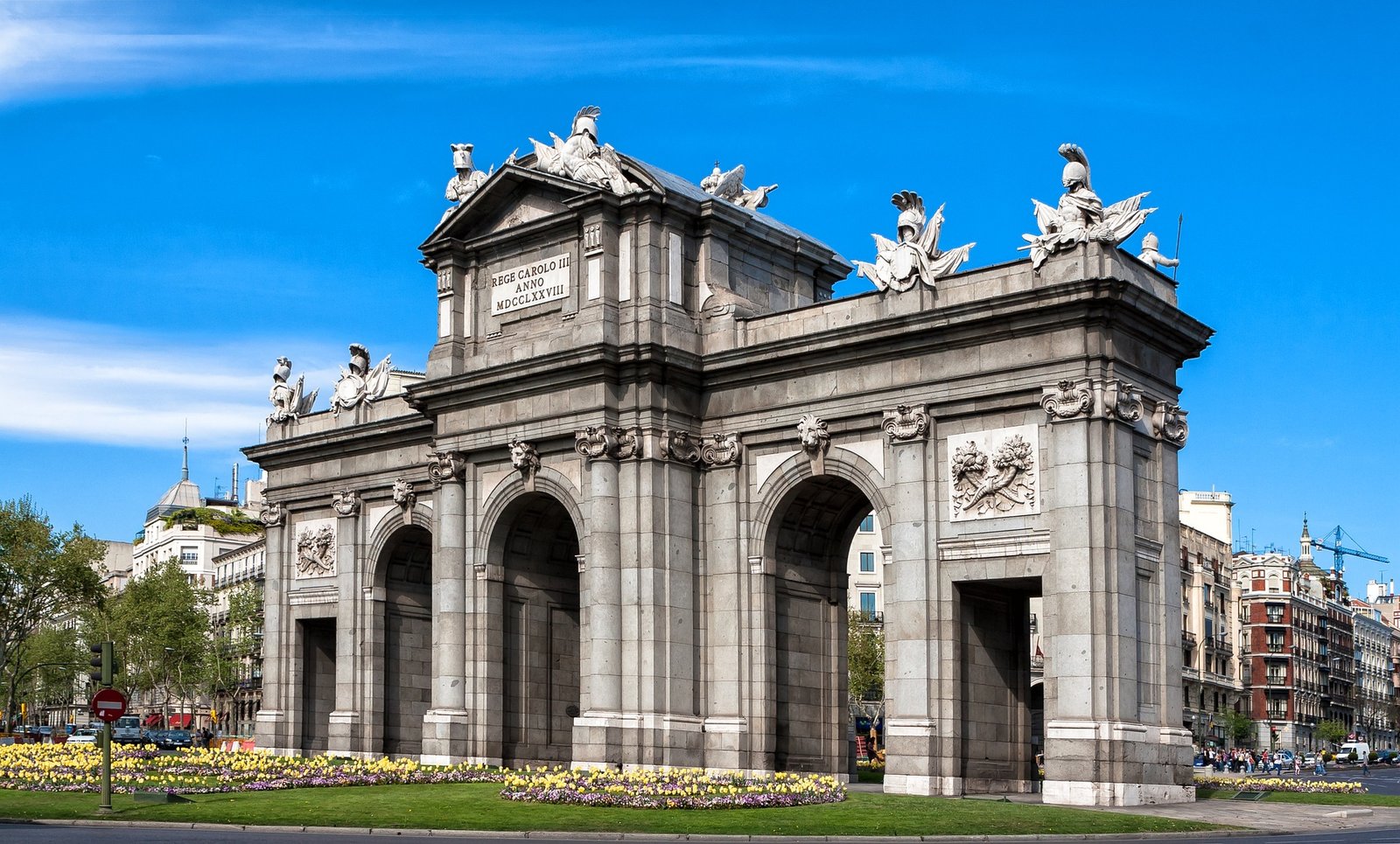
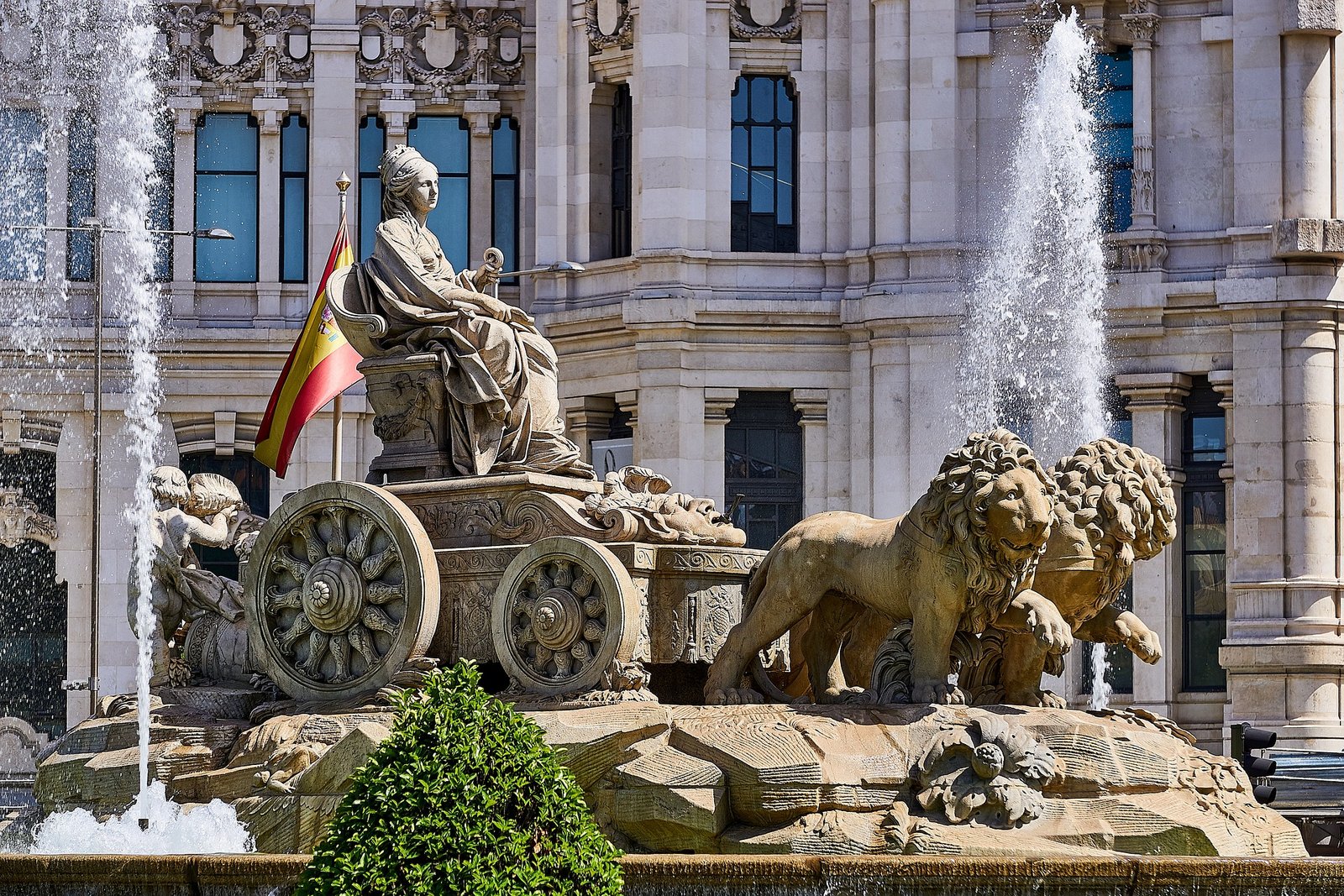
Often referred to as ‘the best mayor of Madrid,’ King Charles III’s reign was marked by significant urban reforms that modernized the city. His efforts led to the construction of key public works, including the Puerta de Alcalá, the Cibeles Fountain, and the Prado Museum. His vision for a cleaner, more orderly Madrid laid the groundwork for the city’s modern infrastructure.
Charles III’s reforms transformed Madrid from a medieval city into an Enlightenment-era capital. His focus on public health, education, and infrastructure led to the creation of new roads, parks, and institutions that improved the quality of life for residents and visitors alike. The Puerta de Alcalá became a symbol of Madrid’s openness to the world, and the Prado Museum, originally a natural history museum, became a center for art and culture.
Contemporaries such as Ventura Rodríguez, who designed the Cibeles Fountain, and Francisco Sabatini, who worked on the Royal Palace, were key figures in this transformation. Their contributions helped shape Madrid into a city that embraced both its historical roots and modern aspirations.
6. Ricardo Velázquez Bosco (1843-1923)
A prolific architect and restorer, Velázquez Bosco played a crucial role in preserving Madrid’s historical buildings while also contributing to its modern architectural landscape. His works include the Palace of Velázquez in Retiro Park and the restoration of the Royal Palace’s Sabatini Gardens.
Velázquez Bosco’s approach to architecture was characterized by a respect for historical styles combined with modern techniques. His restoration of the Sabatini Gardens helped preserve one of Madrid’s most important green spaces, while the Palace of Velázquez showcased his ability to blend traditional design with contemporary functionality.
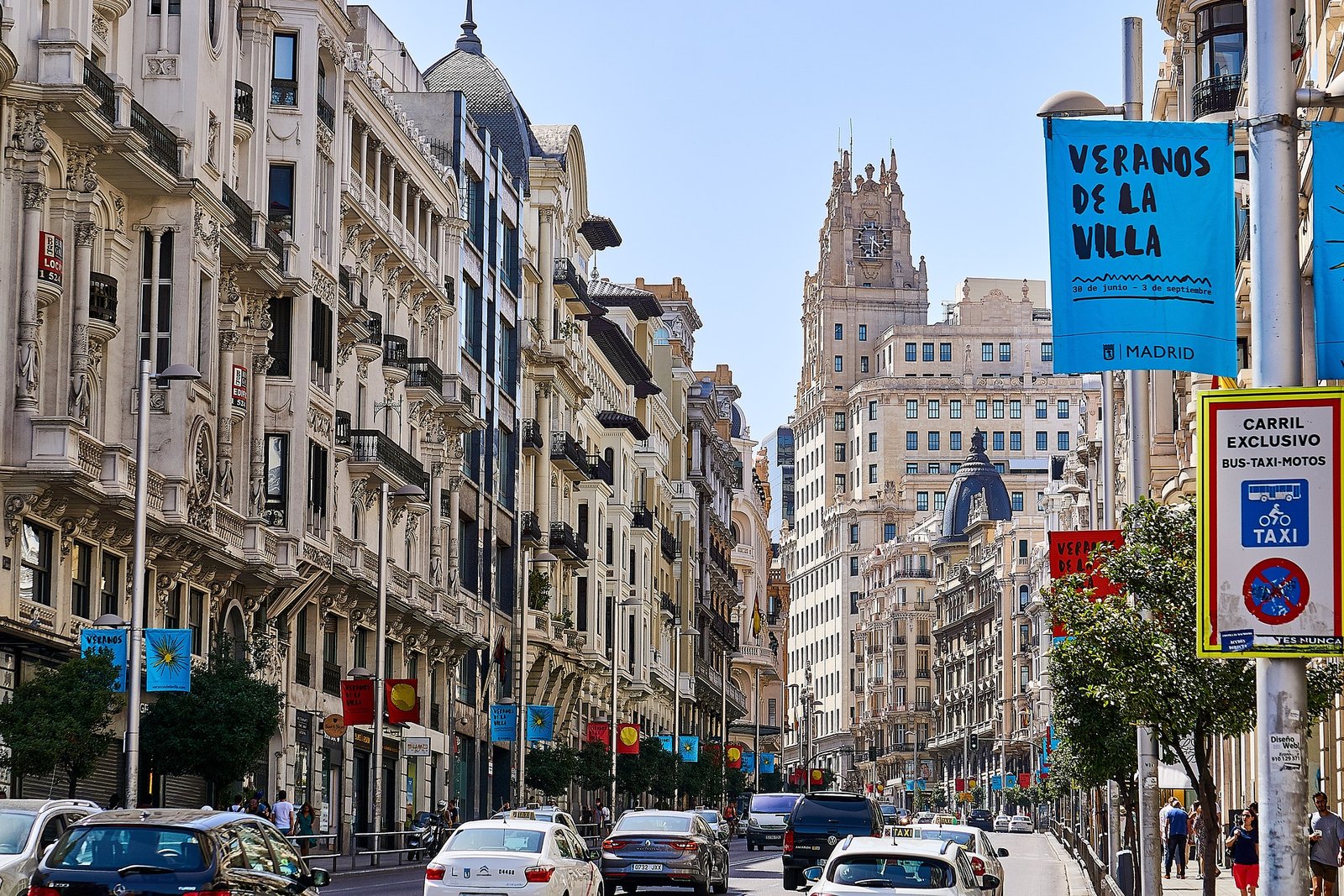
His contemporaries, such as Antonio Palacios, who designed the Palacio de Cibeles, and Joaquín Otamendi, who worked on the Gran Vía, were also instrumental in shaping Madrid’s modern identity. Together, these architects ensured that Madrid’s expansion into a modern metropolis did not come at the cost of its historical heritage.
7. The 1960s and 1970s: A New Wave of Creativity
The 1960s and 1970s were decades of significant cultural and social change in Madrid, influenced by a global wave of modernism and avant-garde movements. These years saw the emergence of new architectural styles, groundbreaking artistic movements, and influential figures in literature and film who reshaped Madrid’s cultural landscape.
- Fernando Higueras (1930-2008) was a pioneering architect whose work in Madrid during the 1960s and 1970s introduced innovative designs that blended modernist principles with traditional Spanish elements. His notable works include the Instituto del Patrimonio Cultural de España and the Torres Blancas, a residential building that became an icon of organic architecture in Spain.
- Eduardo Chillida (1924-2002), although primarily associated with the Basque Country, had a profound influence on Madrid’s art scene during this period. His abstract sculptures, characterized by their exploration of space and material, were exhibited in Madrid’s leading galleries, influencing a generation of artists.
- Luis García Berlanga (1921-2010), a film director and screenwriter, became one of the most prominent figures in Spanish cinema during the Franco era. His films, such as El Verdugo and La Escopeta Nacional, provided a satirical yet poignant commentary on Spanish society, earning him international acclaim and establishing Madrid as a center for film and cinematic arts.
These figures, alongside others in literature, such as Camilo José Cela, who won the Nobel Prize in Literature in 1989, and Antonio López García, known for his hyper-realistic paintings, contributed to a vibrant cultural revival in Madrid during the latter half of the 20th century.
8. Pedro Almodóvar (1949-present) – Continued
His contemporaries in the arts, such as architects Rafael Moneo, who designed the Atocha Train Station extension, and Juan Navarro Baldeweg, known for his work on the Teatro Canal, have also contributed significantly to Madrid’s cultural landscape. Moneo, a Pritzker Prize-winning architect, is celebrated for blending modernist principles with respect for historical context, a philosophy evident in his extension of the Prado Museum. Navarro Baldeweg’s designs have added a contemporary flair to Madrid’s architectural scene, particularly with his innovative use of light and space.
Almodóvar’s contemporaries in other fields have also left their mark. Ágata Ruiz de la Prada, a fashion designer, has brought Madrid’s fashion scene to international prominence with her bold, colorful designs that embody the city’s lively spirit. In the realm of literature, Javier Marías (1951-2022), a novelist and essayist, gained international recognition for his works that often explore themes of memory, identity, and the intricacies of human relationships. His novels, many of which are set in Madrid, offer a deep, introspective look at the city’s soul.
These figures have collectively contributed to Madrid’s reputation as a hub of creativity and innovation, each leaving an indelible mark on the city’s cultural and intellectual fabric.


